
Mifflin Township City Directory Holdings
Mifflin Township is a civil township, not a city, so there is no single standalone Mifflin Township city-directory run. Its land was part of a five-mile-square township established in 1811, and later annexations brought pieces under Columbus or Gahanna labels. The useful historical shelf is therefore regional. Columbus Metropolitan Library, or CML, brings together the strongest local directory, map, and genealogy materials. Its library collection, digitized volumes, county society publications, and state archives each answer a different part of a household question.
| Collection | Years | Where Held | Access |
|---|---|---|---|
| CML city directories | Back to 1841; cataloged run 1843-1889 | CML Main Library Local History & Genealogy | In-library consultation |
| CML digitized City Directories | Collection dates from the 1840s; digitization ongoing | CML digital collection | Browse online volumes |
| Early Franklin County telephone directories | Collection scope varies by volume | CML digital collection and library | Household or address lead |
| Federal census | Public through 1950 | National Archives and library genealogy resources | Household corroboration |
The coverage labels matter more than a broad search result. A directory volume can be useful without representing every person in historic Mifflin Township. Record the volume title, stated geography, year, and page or image before treating a listing or an omission as evidence.
Mifflin Township Directory Geography
Older sources use place names that do not always match a present mailing address. A deed can say Mifflin Township, a later directory can say Columbus or Gahanna, and a parcel profile can carry another routing label. Those differences reflect annexation and postal practice, not necessarily a move. Keep the township label, municipal label, postal city and ZIP, and legal description together with the date of each item.
That care is particularly important for city directories. CML explains that pre-1920 Columbus directories cover addresses within Columbus corporate limits. A rural or unincorporated Township household might not appear even when the family was nearby. Check the title or coverage page before making a conclusion. The modern parcel route is covered in the Mifflin Township by-street directory when an old address must be tied to a current parcel.
Mifflin Township history supplies the local annexation context. It is a geographic explanation, not a substitute for the volume’s stated coverage.
Mifflin Township City Directory Shelves
CML’s Local History & Genealogy area is on the third floor of the Main Library at 96 South Grant Avenue in Columbus. The collections guide describes printed and microform sources for land, probate and wills, cemeteries, vital records, naturalization, immigration, military research, and more than 7,000 published family histories. It also identifies self-service Franklin County city directories. Library staff and the Ask-a-Librarian route can help distinguish a volume that covers a former Township area from one confined to a corporate boundary.
The CML History & Genealogy service also offers maps, yearbooks, photographs, documents, newspaper leads, and up to six free obituary requests each month. Those sources make a directory line more useful when a name has a common spelling or an address disappeared between issues.
This CML local-history source introduces the research service and collection access.
The library service is a good first stop when the question involves a person, an address, and a date rather than a current contact claim.
Mifflin Township Directory Street Listings
The city-directory collection becomes more address-focused in the later street-listing era. CML’s House History material says street-address listings begin in 1911. Before then, work name first and treat an address as available only when the volume actually prints it. A later criss-cross or street section can point from an address to a listed household, but it does not cure a gap in an older volume or extend coverage outside the place named by that edition.
Digitization is useful, but it is still in progress. The CML digitized City Directories collection describes a project to digitize much of its directory collection from the 1840s and early Franklin County telephone directories. Browse a year, then inspect the title page and front matter. Do not assume every volume is online, complete, or searchable by optical character recognition.
The digitized directory collection provides the public browse route for available historical volumes.
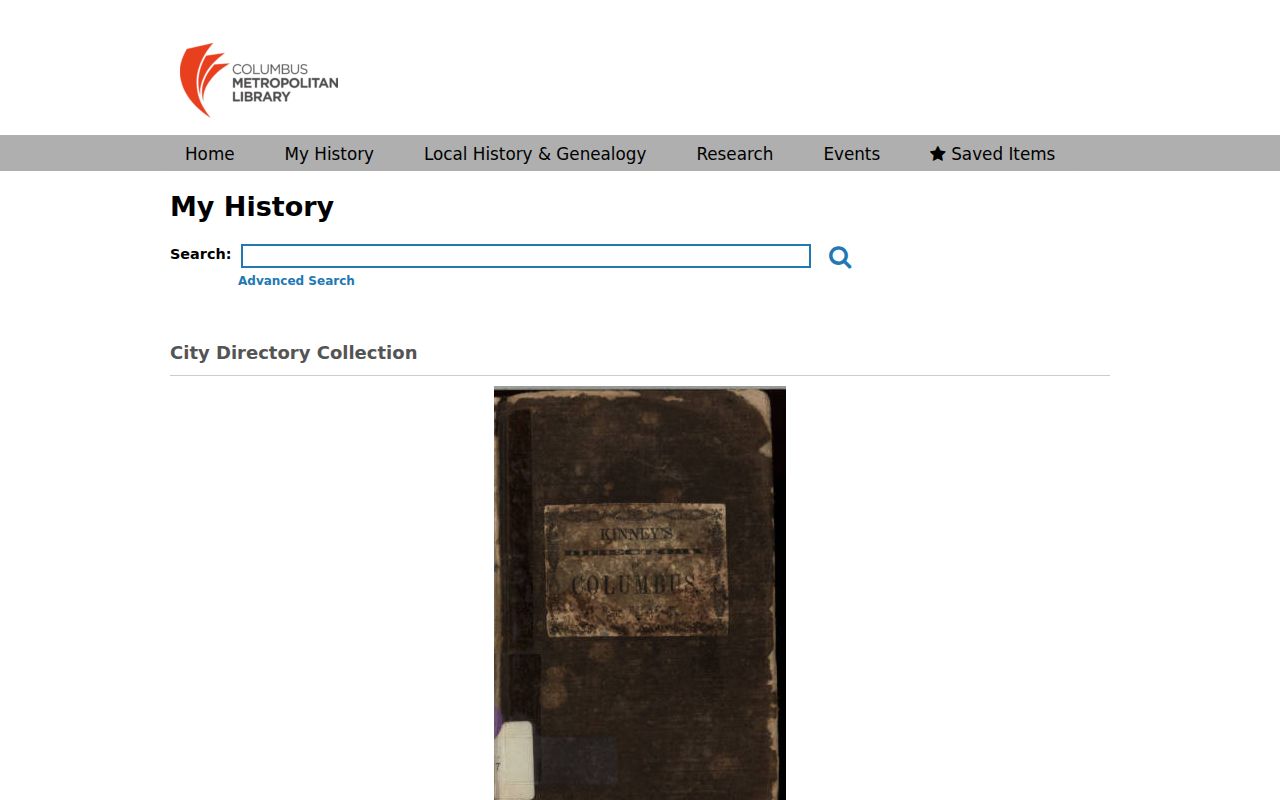
A saved page image and directory year give a later researcher a stable reference even if a browse interface changes.
Note: A missing pre-1920 Columbus directory entry can reflect the corporate-limit boundary rather than a missing Mifflin Township household.
Reading Mifflin Township City Directories
A city directory entry should be transcribed before it is interpreted. CML’s digitized collection supports an entry inventory that includes the printed name or head-of-household form, directory year, page or image, address when available, and any business or occupation wording. Early directory titles identify householders or heads of family, businesses, and occupations. They do not prove that every issue has the same symbols, spouse notation, ownership mark, or abbreviation system.
| Name or head | Copy the printed surname and given-name form exactly, including initials or variant spelling. |
|---|---|
| Directory placement | Save the directory year and page or image number. |
| Address | Record it only when the volume supplies one, and note whether the listing is alphabetical or street ordered. |
| Business or occupation | Preserve the wording as printed; it can distinguish people with similar names. |
| Listing form | Check whether the book is a name list, a householder index, or a later street listing before drawing an address conclusion. |
- Criss-cross directory
- A directory section arranged by street or address rather than only by surname. It is most useful when that particular volume includes street listings.
- Householder index
- An index organized around the named household or head entry, not a guaranteed record of every person at the address.
- Abbreviation key
- The volume’s own explanation of shortened terms and marks, usually in front matter. Read it before expanding a printed notation.
Keep uncertainty in the citation. A directory name is a dated listing, not proof of family relationship, ownership, or continuous residence.
Mifflin Township Directory Timeline
The known dates form a research timeline, not a claim of uninterrupted Township coverage. They show when CML’s directory material becomes useful, when address work strengthens, and why each volume’s geographic statement must still be checked.
- 1841: CML says its city-directory holdings reach back to this year at the Main Library.
- 1843-1889: The online catalog identifies this Columbus City Directory run as in-library material.
- 1911: CML’s House History guide identifies the beginning of street-address listings.
- Before 1920: Columbus directories cover addresses within Columbus corporate limits, creating a clear limit for older Mifflin Township research.
- Current project: CML continues to digitize much of its directory collection and early Franklin County telephone directories.
Use the date to select a route. Name-first searching is often needed for older volumes, while later street listings can support an address question only after the volume’s coverage has been verified.
Tracing Mifflin Township City Households
Household tracing works best as a short sequence, not as a jump between far-apart years. Start near a known date, write down the spelling, address, page, and the directory’s geographic label, then move one or two issues back and forward. A change, gap, or different address is a lead that needs another record. For census pairing, federal census records are publicly released through 1950, so the directory date should be compared with the nearest available census and not treated as a census replacement.
- Find the nearest available directory year and capture the exact printed name, page or image, place label, address when given, and occupation or business wording.
- Check one or two issues on each side of that year, retaining spelling variants and every address form instead of silently normalizing them.
- Use a street or criss-cross section only when the edition provides it, then record whether the candidate came from alphabetical or street order.
- Pair the directory year with the nearest released federal census and compare the household with a Recorder, Probate, obituary, or cemetery source.
- Preserve the parcel or legal-description connection when an address spans changing Township, Columbus, Gahanna, or postal labels.
Disappearance from a directory can signal a move, a death, a changed jurisdiction, a spelling variant, an unlisted household, or a coverage limit. It is never enough, by itself, to identify what happened.
Mifflin Township Directory Map Evidence
CML’s House History guide links a directory search to maps, Sanborn material, the Auditor, and Recorder sources. Its Sanborn holdings include Columbus map years for 1887, 1891, 1901, 1921, and 1921-51. A map can place a building footprint or street context only where the property fell within mapped coverage. It cannot create a household list, and it cannot resolve an annexation label without a dated parcel or legal-description check.
The house-history route is especially useful when an old street form conflicts with a later directory name. Follow the legal description through the Recorder and use the map as place evidence. This keeps the historical city-directory work distinct from a current property search.
CML’s House History guide brings the library’s directory, map, property, and deed research routes together.
The guide supports a records trail across collections, while each historical address still needs its era-specific boundary and source checks.
Mifflin Township Cemetery Directory Clues
Mifflin Cemetery adds a local endpoint to directory research. The burial ground began with the Mifflin Presbyterian Church in 1818. Township materials say the original interment books were destroyed by fire, and that the current database was rebuilt from surviving records for nearly all burials. The Township also provides lot and subdivision maps, plus an older cemetery map. That is a strong clue trail, but not an uninterrupted original register.
Use a cemetery result to form a precise question: whether a mapped lot, obituary, Probate record, death record, census, or dated directory entry supports the same identity. The Mifflin Cemetery source explains the reconstructed database and historic mapping.
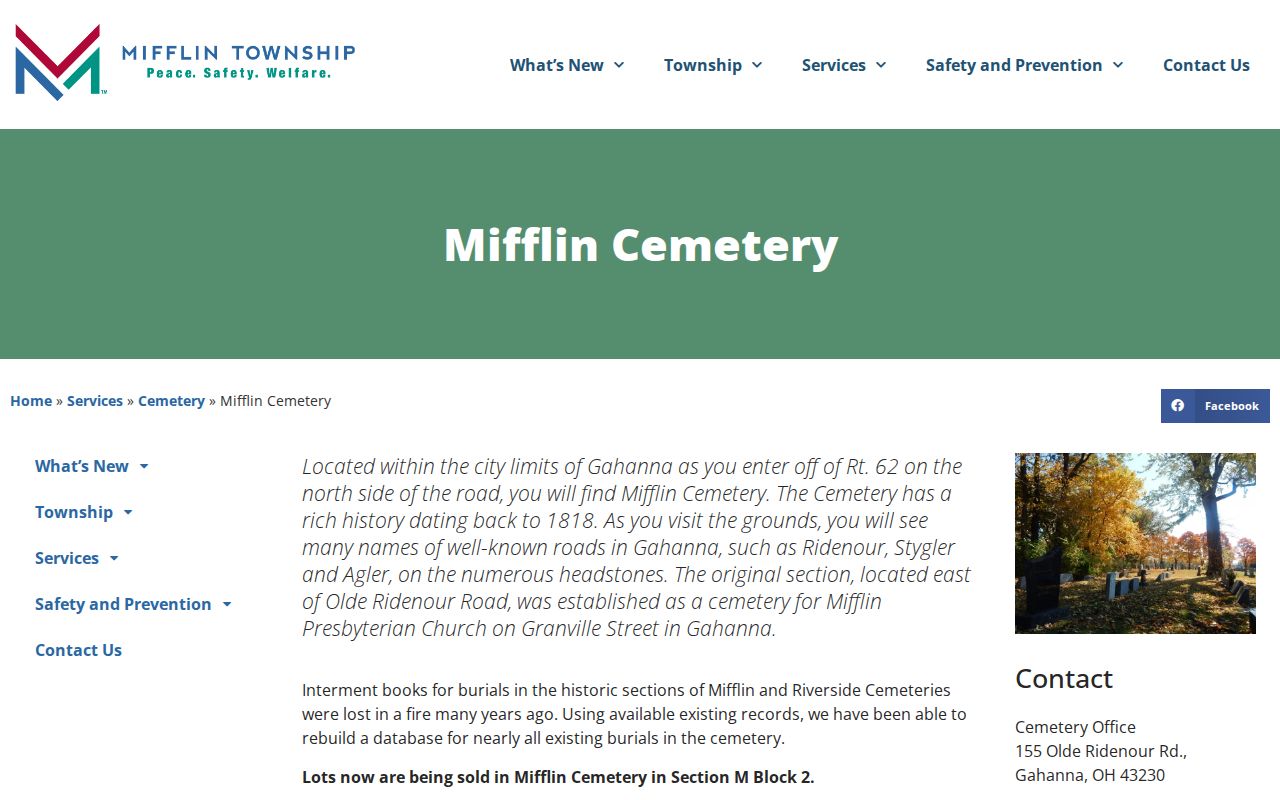
A directory gap near a death date may be investigated with cemetery and obituary evidence, while clearly labeling the cemetery database as reconstructed.
Note: Map evidence and a reconstructed burial record are useful corroboration, not proof that an original interment book survived.
Mifflin Township Directory Research Channels
When the digitized collection does not settle a question, use the physical and archival channels in order. CML offers the local directory and map shelf, in-person collection use, staff help, and an online question route. The Ohio History Connection Archives & Library provides statewide archival guidance and historical death-certificate research. FCGHS supplies county publications and research aids, but its 2026 notice limits new research work, so it is not a same-day substitute for the original record custodian.
FCGHS lists the 136-page Mifflin & Marion Township Cemetery, volume 1, among its publications. A transcription or publication can point to a record, but legal copies remain with the Recorder, Probate Court, or another original custodian. The Franklin County Genealogical & Historical Society is the source for that publication and service status.
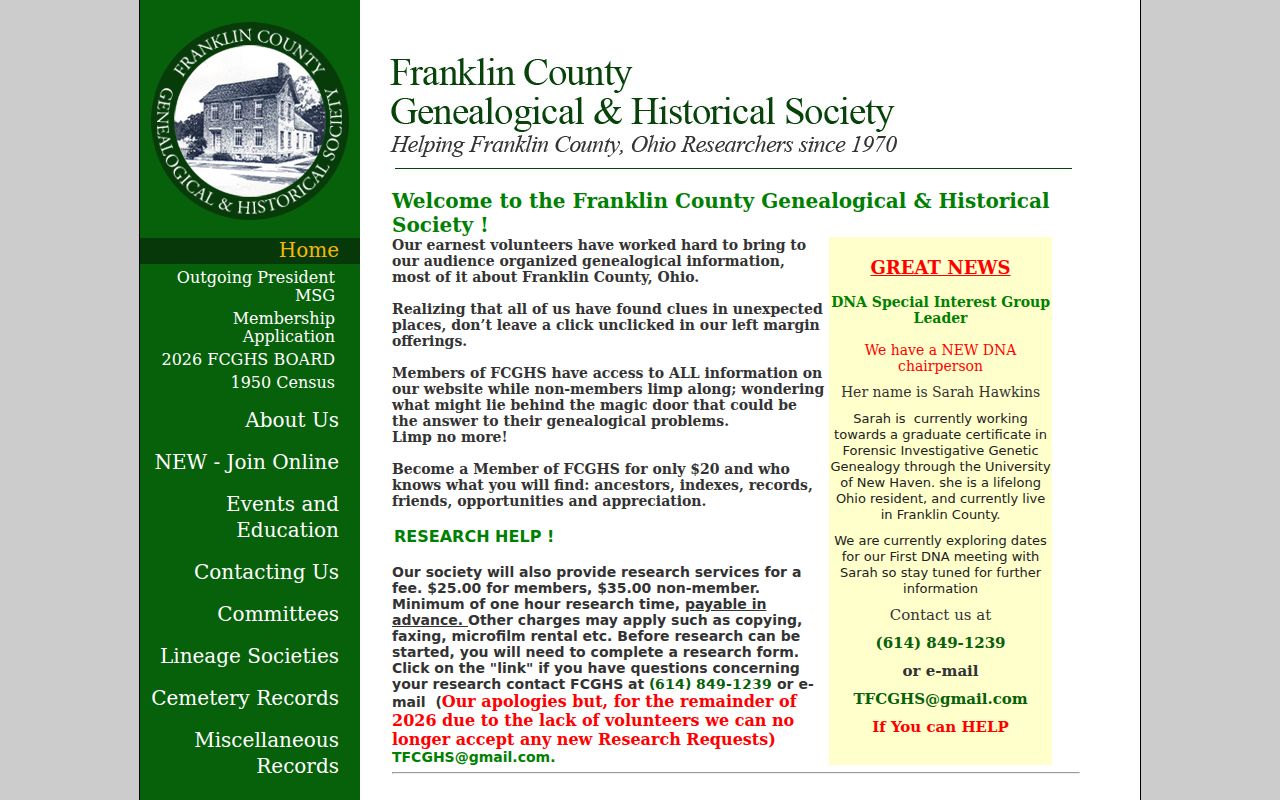
Its county publications can deepen a directory trail, while the library, archives, cemetery, Probate Court, and Recorder each retain different evidence.